
Making Smart Cities More Playable
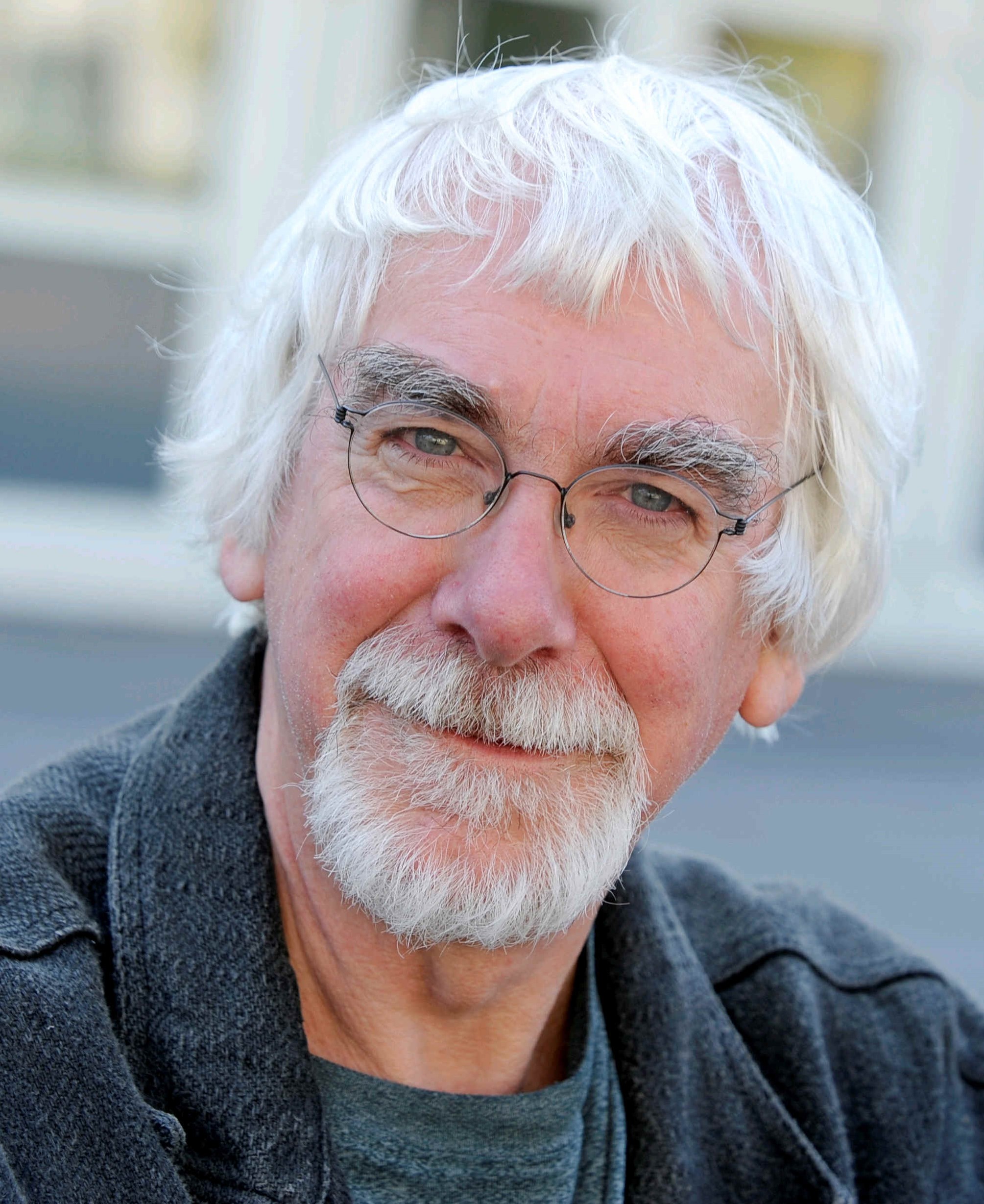
Prof. Anton Nijholt, Human Media Interaction, University of Twente, Netherlands
Abstract:
Digital technology can make cities smart. City management can make use of information that can be extracted from databases in which data is collected about energy consumption, traffic behavior, waste management, human behavior in public environments, and opinions of the general public, for example as they can be collected from social media. But can this digital technology and the data collected from it help to make living in a city more enjoyable? How can digital technology and information provided by digital technology make cities playful, allow citizens to engage in playful and entertaining activities that help to enjoy their daily and sometimes boring activities such as commuting, working, career and social obligations, housekeeping? In this talk, we investigate how sensors and actuators in an urban environment can be introduced and used to design playful applications. We discuss how ideas about playable cities have developed and pay attention to the criticism of the concept of playable cities that has emerged in recent years.
Role of Metaphors in Information Visualization

Prof. Prasad Wimalaratne, Head of the Department – Department of Communication and Media Technologies, University of Colombo School of Computing, Sri Lanka
Abstract:
3D metaphoric information visualization visualizes abstract data & information using spatial metaphors. Interactive information visualization systems employ a variety of metaphorical devices to make abstract, complex, voluminous, or otherwise difficult-to-comprehend information understandable in graphical form. Due to its ability to explain new concepts in terms of familiar ones, metaphor is used at all levels of interaction with computers. It has been observed that a system is intuitively usable if the users‘ unconscious application of prior knowledge leads to effective interaction. This talk will focus on metaphorical information visualization in 2D & 3D and discuss some of the research carried out at UCSC in metaphorical information visualization in large data sets using Pandemic data as a case study as well as visualization of software systems together with security vulnerabilities, code evaluation etc.
Artificial Intelligence for Internet of Things Security and Forensics
Dr. Nhien-An Le-Khac, Lecturer/Assistant Professor, School of Computer Science, University College Dublin, Ireland.
Abstract:
Today is the era of Internet of Things (IoT), millions of machines such as cars, smoke detectors, watches, glasses, webcams, smart blood pressure monitor, etc. are being connected to the Internet. The number of machines that possess the ability of remote access to monitor and collect data is continuously increasing. This development makes, on one hand, the human life more comfortable, convenient, but it also raises on other hand issues on security, privacy. Some challenges can be listed as the multiple locations and networks; the management and automation features of an IoT network; the survival period and visibility nature of IoT devices; huge amount of IoT data collected. Due to the un-standardized nature of IoT devices, the cybercrimes can exploit security vulnerability of these devices as well as of their eco-systems such as the insecure web, backend API, cloud, or mobile interfaces, etc. Attacks such as sniffing, surveillance, DDoS, etc. on IoT networks and IoT devices are normally difficult to detect.
Recently, Artificial Intelligence (AI) have made tremendous progress in many areas such as computer vision, pattern recognition, natural language processing, cybersecurity, etc. Many AI-based approaches, using machine learning and deep learning models have been developed as a key solution to secure IoT eco-systems. Hence, in the first part of this talk, I am willing to present achievements of using machine learning and deep learning for IoT security and forensics.
On the other hand, such AI-based approaches themselves could also raise issues in privacy and security. It is more severe if these approaches are black-box to end-users or investigators. For example, deep learning models are trained on very large amounts of data from potentially untrustworthy sources, providing opportunities for adversaries to manipulate them. In recent years, many sophisticated adversarial attack techniques have been exploited to compromise deep learning based systems. Therefore, in the second part, I share my thought on how to provide the robustness and safety to AI-based models against these adversarial attacks.
Elephants and algorithms - how computer science can revolutionize acoustic monitoring

Dr. Daniela Hedwig, Research Associate, K. Lisa Yang Center for Conservation Bioacoustics, Cornell University, USA
Abstract:
Passive acoustic monitoring (PAM) is an emerging non-invasive method that allows for the continuous, long term and large-scale monitoring of populations of elusive, yet, acoustically conspicuous terrestrial species as well as anthropogenic disturbance at reasonable cost. As such, PAM can serve as an excellent evaluation tool that enables information-based decision making and adaptive management in wildlife conservation. However, challenges associated with retrieving, storing, and analysing vast amounts of sound recordings from remote locations still impede data acquisition and interpretation, and slow down the turnaround time from sound to actionable data for conservationists. The Elephant Listening Project at Cornell University is at the forefront of developing and implementing PAM tools to support protected area managers across Central Africa in monitoring forest elephant populations and illegal gun hunting. This talk will illustrate applications of PAM in forest elephant conservation, challenges on the ground and in the analysis lab, and how innovative computer technology and engineering solutions offer opportunities to contribute to effective conservation strategies.
Altered Reality: Designing Immersive Experiences Using Multisensory Approaches

Dr. Roshan Peiris, Assistant Professor, Rochester Institute of Technology (RIT)
Abstract:
Our senses help perceive and make our own realities of the world. ‘Altered Reality’ is the notion of altering our perceptions through various technologies such as virtual reality and haptics to present enhanced and immersive alternate realities. Here, we explore various multi-sensory approaches to achieve these Altered Realities through research themes that range from basic human perception studies to creating new technologies and experiences for applications in the industry, entertainment, and various social communities. In this talk, I will highlight some of our recent works that especially focus on new experiences around the head and the face. Through works such as ThermoVR, FacePush, and LiquidReality I will discuss the process of creating new interactions in this domain and creating realistic effects such as feeling the water from a virtual shower or punch from a virtual boxer directly on the face! Furthermore, I will introduce my new research direction of Immersive Accessibility and discuss its future directions.
Today's students are tomorrow's workforce, So what?
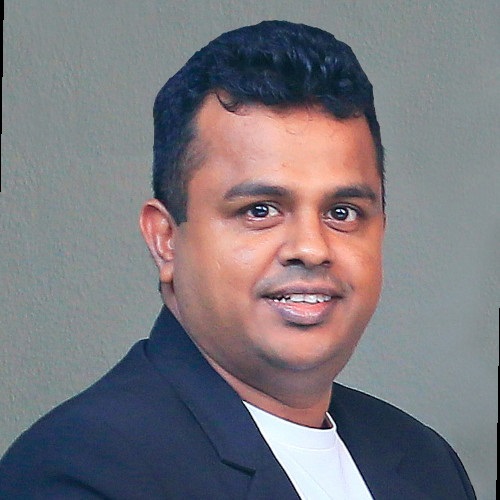
Mr. Chathuranga Manamendra, Director Software Engineering, IFS, General Council Member, SLASSCOM
Abstract:
Societies have been immensely impacted by the technological advancements which have caused us to comprehensively transform our way of working, travelling, buying, fulfilling minimum requirements, interacting & socializing and many more. It’s need not to say that the speed of the changes will continue to increase by altering many of our current practices. So what? How do we enable students to succeed in the workforce while it evolves to both create and eliminate jobs?