Everysense Everywhere Human Communication
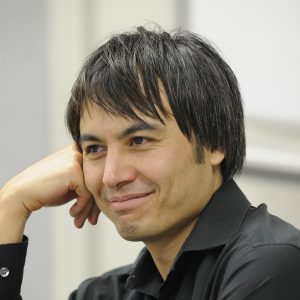
Professor Adrian David Cheok, Director of the Imagineering Institute, Malaysia
Abstract:
This talk outlines new facilities that are arising in the hyperconnected internet era within human media spaces. This allows new embodied interaction between humans, species, and computation both socially and physically, with the aim of novel interactive communication and entertainment. Humans can develop new types of communication environments using all the senses, including touch, taste, and smell, which can increase support for multi-person multi-modal interaction and remote presence. In this talk, we present an alternative ubiquitous computing environment and space based on an integrated design of real and virtual worlds. We discuss some different research prototype systems for interactive communication, culture, and play.
Deep learning for computer vision
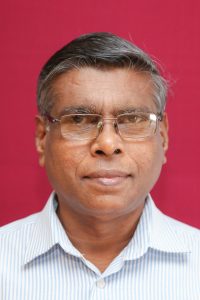
Senior Professor Nihal Kodikara, Senior Professor, University of Colombo School of Computing
Abstract:
Today, as of 2020, the field of computer vision is rapidly evolving, holding vast potential in many application areas. The limitations in the traditional computer vision systems and the need for deep learning approaches will be discussed in this speech. The use of deep learning models such as CNN, RNN, GAN and FCN for computer vision applications will be presented with examples using Tensorflow 2.0 and Keras.
From Machine Learning to Deep Learning

Professor Wray Buntine, professor, Monash University, Australia
Abstract:
Machine Learning has had some remarkable successes in its day, and is the main driver for Data Science. However, Deep Learning has accelerated these remarkably. This talk is a review of some of the major technologies underlying the successes from the perspective of a machine learning researcher. In particular, what technologies did Machine Learning develop well, and what has changed to make Deep Learning so successful. I’ll draw on some examples of projects in my group as well as some theoretical insights, and present some directions for the future we are taking.
Future of HCI in Emerging Regions
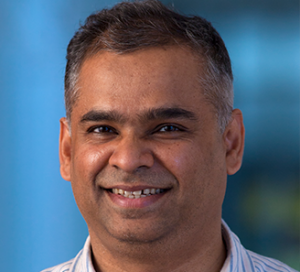
Prof. Anirudha Joshi, professor, IDC School of Design, Indian Institute of Technology, Bombay, India
Bio:
Anirudha Joshi is a faculty member in the Industrial Design Centre, IIT Bombay. He teaches and does research in the field of human-computer interaction design, user studies and usability evaluation. His area of research interest is interaction design for users in developing economies and overlaps between software engineering and HCI design process. Anirudha conducts short courses on HCI for professionals. He is consultant to several companies where he helps them to design innovative products and to institutionalize HCI. He has authored papers related to HCI in Indian and international conferences and journals. He is on review committees of leading HCI conferences and was the co-chair of the programme committee of the first India HCI conference held in December, 2004 in Bangalore. Anirudha represents India on IFIP TC13. Before joining IIT Bombay, Anirudha worked in the field of interaction design for software, multimedia and the Internet. Anirudha has a BTech in Electrical Engineering from IIT Bombay, and an MDes in Visual Communication also from IIT Bombay.